
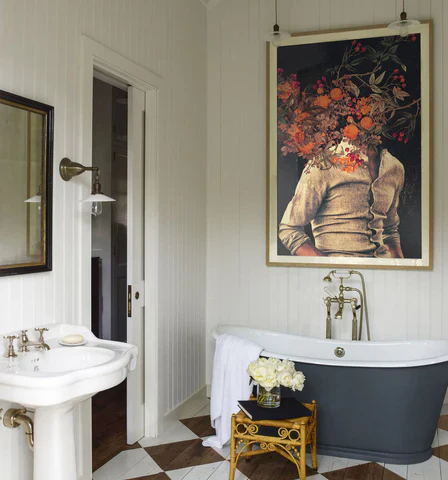
Picture this: you’ve just discovered the perfect vintage botanical print at an estate sale—a stunning piece that would transform your bathroom into an elegant sanctuary. However, three months later, you watch in horror as moisture warps the frame, mold creeps across the canvas, and your treasured artwork becomes an expensive casualty of bathroom humidity.
This devastating scenario plays out in countless homes every year, destroying irreplaceable vintage pieces worth thousands of dollars. The harsh reality? Most homeowners remain completely unaware that standard framing materials spell disaster for artwork in humid environments.
Fortunately, modern conservation science has revolutionized how we protect vintage art in challenging conditions. By understanding bathroom-safe materials and implementing proven protective strategies, you can confidently display your cherished pieces without fear of moisture damage, warping, or deterioration.
The secret lies in choosing the right materials from the start—because once damage occurs, restoration costs often exceed the artwork’s original value. Let’s explore the game-changing materials and techniques that will safeguard your vintage collection for generations.
Understanding the Enemy: How Bathroom Conditions Destroy Art
The Hidden Dangers Lurking in Your Bathroom
Bathrooms create perfect storms for artwork destruction through multiple environmental factors working simultaneously. First, humidity levels fluctuate dramatically—from 30% during dry periods to 80% immediately after hot showers. These rapid changes cause materials to expand and contract repeatedly, leading to warping, cracking, and delamination.
Moreover, temperature variations compound the problem. Steam carries heat that can reach 100°F near ceiling areas, while cooler zones near floors maintain lower temperatures. This creates convection currents that distribute moisture unevenly, causing uneven expansion and unpredictable damage patterns.
Additionally, poor ventilation traps moisture for extended periods, creating ideal conditions for mold growth, paper deterioration, and metal corrosion. Standard framing materials simply cannot withstand these challenging conditions without specialized protection.
The True Cost of Inadequate Protection
Recent conservation studies reveal that improperly protected artwork in humid environments suffers measurable damage within six months. Furthermore, restoration costs typically range from $200 to $2,000 per piece, depending on damage severity and artwork value.
Beyond financial implications, many vintage pieces suffer irreversible damage that no amount of money can repair. Original patina, historical authenticity, and collectible value disappear permanently once moisture penetrates protective barriers.
Frequently Asked Questions
Traditional framing materials pose multiple risks in humid environments. Standard cardboard backing absorbs moisture like a sponge, expanding and warping while providing nutrients for mold growth. Regular glass offers no protection against humidity infiltration, allowing moisture to condense behind the glazing.
Museum-quality materials undergo rigorous testing to ensure stability under extreme conditions. Conservation-grade backing boards resist moisture absorption while maintaining dimensional stability across wide temperature ranges. These materials often cost 300% more than standard alternatives but provide exponentially better protection.
While basic protective measures can be implemented DIY-style, truly effective bathroom-safe framing requires specialized knowledge and materials. Professional conservators understand complex interactions between different materials and environmental conditions.
The 5 Game-Changing Materials That Protect Vintage Art Forever
1. Conservation-Grade Moisture Barriers: Your First Line of Defense
Modern moisture barrier films represent the most significant advancement in art protection technology. These ultra-thin membranes, typically measuring just 2-4 millimeters thick, create impermeable seals that block 99.9% of moisture transmission.
Leading manufacturers like Tyvek and Coroplast produce specialized barrier films designed specifically for conservation applications. These materials maintain flexibility across extreme temperature ranges while providing decades of reliable protection.
Installation requires precision—even tiny gaps compromise effectiveness completely. Professional conservators use specialized tapes and sealing techniques that ensure complete moisture exclusion. When properly installed, these barriers can protect artwork for 50+ years without replacement.
The investment proves worthwhile quickly. Conservation barriers cost $30-80 per piece but prevent damage that could cost thousands to repair or prove completely irreversible.
2. Aluminum Composite Backing: The Unbreakable Foundation
Aluminum composite panels revolutionize backing board technology by combining lightweight construction with absolute dimensional stability. Unlike traditional materials that expand and contract with humidity changes, aluminum composites maintain perfect flatness regardless of environmental conditions.
These panels feature aluminum skins bonded to polyethylene cores, creating structures that resist warping, don’t support mold growth, and provide excellent insulation properties. Major brands like Dibond and Alucobond manufacture conservation-specific versions that meet museum standards.
Furthermore, aluminum backing eliminates outgassing concerns that plague conventional materials. Standard backings release chemicals that can stain or damage artwork over time, while aluminum composites remain completely inert.
Installation requires specialized cutting tools and techniques, but the results justify the extra effort. Properly mounted aluminum backing can support artwork indefinitely without maintenance or replacement.
3. Low-E Glass: Advanced Glazing That Works Miracles
Low-emissivity (Low-E) glass represents the cutting edge of glazing technology for art protection. This specialized glass features microscopic metallic coatings that block 99% of UV radiation while reducing heat transfer by up to 70%.
The UV protection alone justifies the investment—ultraviolet radiation causes permanent fading and deterioration that no restoration can reverse. Low-E glass provides this protection while maintaining perfect optical clarity that doesn’t interfere with artwork viewing.
Additionally, the thermal properties help stabilize temperatures behind the glazing, reducing condensation formation that can damage artwork directly. This temperature stability becomes crucial in bathrooms where heat fluctuations occur constantly.
Premium Low-E glass costs approximately twice as much as standard glazing but provides protection worth many times its cost. Consider it essential insurance for any valuable vintage piece displayed in challenging environments.
4. Closed-Cell Foam Mounting: Flexible Protection That Adapts
Closed-cell foam mounting systems provide crucial cushioning while maintaining perfect dimensional stability. Unlike traditional mounting methods that create rigid connections, foam mounting allows natural movement while preventing stress concentrations that cause damage.
These foams feature sealed cellular structures that won’t absorb moisture or support biological growth. Leading products like Volara and Ethafoam maintain their protective properties for decades without degradation.
Moreover, closed-cell foams distribute mounting stresses evenly across artwork surfaces, preventing localized damage that rigid mounting can cause. This even distribution becomes especially important for vintage pieces that may have weakened over time.
Professional installation ensures optimal performance, but experienced DIY framers can achieve excellent results with proper techniques. The key lies in selecting appropriate foam densities and thicknesses for specific artwork requirements.
5. Stainless Steel Hardware: Corrosion-Proof Permanence
Standard framing hardware fails rapidly in humid environments, with rust stains and structural failures occurring within months. Stainless steel hardware eliminates these concerns while providing superior strength and longevity.
Marine-grade stainless steel (316L) offers the highest corrosion resistance, withstanding direct exposure to moisture and temperature extremes without degradation. This material costs more initially but eliminates ongoing maintenance and replacement concerns.
Furthermore, stainless steel hardware maintains consistent performance for decades, ensuring that protective seals remain intact and artwork stays properly positioned. This reliability becomes crucial for valuable pieces that cannot risk shifting or exposure.
Quality stainless steel hardware represents a small percentage of total framing costs but provides disproportionate protection value. Consider it essential for any bathroom art installation, regardless of artwork value.
Advanced Protection Strategies That Guarantee Success
Environmental Monitoring: Know Your Enemy
Installing digital hygrometers allows precise monitoring of humidity and temperature conditions in your bathroom. These devices, costing $20-50, provide early warning when conditions exceed safe ranges for artwork display.
Smart monitoring systems can even send alerts to your smartphone when dangerous conditions develop. This early warning capability allows immediate corrective action before damage occurs.
Data logging features help identify patterns and problem periods, enabling proactive environmental management. Understanding your specific bathroom’s conditions allows optimized protective strategies tailored to actual risks.
Strategic Placement Techniques
Positioning artwork strategically can dramatically reduce exposure to damaging conditions. Avoid walls adjacent to shower areas, where steam concentration reaches maximum levels. Similarly, corner locations often experience poor air circulation that traps moisture.
Higher wall positions typically experience better air circulation but also higher temperatures. Balance these factors based on your specific bathroom layout and ventilation patterns.
Consider rotating displays seasonally to minimize exposure time for particularly valuable pieces. This strategy distributes environmental stress while allowing you to enjoy different artworks throughout the year.
Ventilation Optimization
Upgrading bathroom ventilation provides benefits for both artwork and general bathroom health. Modern exhaust fans with humidity sensors automatically activate when moisture levels rise, maintaining optimal conditions continuously.
Calculate fan capacity based on bathroom volume—most experts recommend complete air changes every 7-10 minutes during peak usage periods. Undersized fans cannot effectively control humidity regardless of artwork protection measures.
Additionally, consider heat recovery ventilators that exchange humid indoor air for fresh outdoor air without losing heating or cooling energy. These systems provide superior humidity control while maintaining energy efficiency.
Budget-Conscious Alternatives That Still Deliver Results
DIY Moisture Control Solutions
While professional conservation materials provide optimal protection, budget-conscious homeowners can implement effective strategies using readily available materials. Moisture-absorbing products like DampRid or rechargeable dehumidifying units help control ambient humidity levels.
Vapor barrier paints create basic moisture protection for walls behind artwork, though they don’t match specialized conservation barriers’ effectiveness. These paints cost under $50 per bathroom and provide measurable improvement over standard wall finishes.
Regular maintenance becomes more critical with budget solutions. Monitor conditions closely and be prepared to relocate artwork temporarily during high-humidity periods like extended rain or heating system maintenance.
Phased Upgrade Approaches
Consider implementing protection upgrades gradually rather than attempting complete solutions immediately. Start with the most vulnerable pieces or those with highest value, then expand protection systematically.
This approach spreads costs while providing learning opportunities that inform future decisions. Experience with initial upgrades often reveals specific challenges or advantages unique to your situation.
Document results carefully to justify future investments and refine techniques for optimal performance. Photography and condition reports help track protection effectiveness over time.
Maintenance and Long-Term Care Strategies
Regular Inspection Protocols
Establish monthly inspection routines that check for early signs of moisture infiltration or material degradation. Look for condensation behind glazing, frame joint separation, or any changes in artwork appearance.
Use flashlights to examine areas that normal lighting might miss, particularly around frame edges and mounting points. Early detection often means the difference between minor adjustments and major restoration projects.
Document findings with dated photographs that create permanent records of artwork condition over time. These records prove invaluable for insurance purposes and help track protection effectiveness.
Professional Maintenance Schedules
Even the best protection systems require periodic professional maintenance to ensure continued effectiveness. Schedule annual inspections with qualified conservators who can identify developing problems before they become critical.
Professional maintenance typically costs $100-300 per piece annually but prevents damage that could cost thousands to repair. Consider this preventive maintenance essential insurance for valuable artwork.
Establish relationships with local conservators before problems develop. Emergency restoration often costs significantly more than planned maintenance, and finding qualified professionals becomes difficult during crises.
Conclusion
Protecting vintage wall art in bathroom environments no longer requires choosing between displaying cherished pieces and preserving them for future generations. Modern conservation materials and techniques provide foolproof protection that allows confident display in even the most challenging conditions.
The key to success lies in understanding that proper protection requires investment in quality materials and proper installation techniques. Cutting corners on materials invariably leads to artwork damage that far exceeds initial savings on protective measures.
Remember that vintage artwork represents irreplaceable cultural heritage that deserves the best protection available. The materials and techniques outlined here have been tested in museums and private collections worldwide, proving their effectiveness under extreme conditions.
Start by assessing your most valuable pieces and implementing protection upgrades systematically. Focus on proper materials selection, precise installation, and ongoing monitoring to ensure long-term success.
Your vintage art collection can safely grace bathroom walls for decades with proper protection. The investment in bathroom-safe materials pays dividends in preserved beauty, maintained value, and peace of mind that comes from knowing your treasures remain secure.
Don’t wait until damage occurs to implement these protective strategies. Every day of delay increases risks exponentially, while proper protection begins working immediately to safeguard your investment.
Take action today to protect tomorrow’s heirlooms. Your future self—and your heirs—will thank you for the foresight to preserve these irreplaceable treasures properly.