
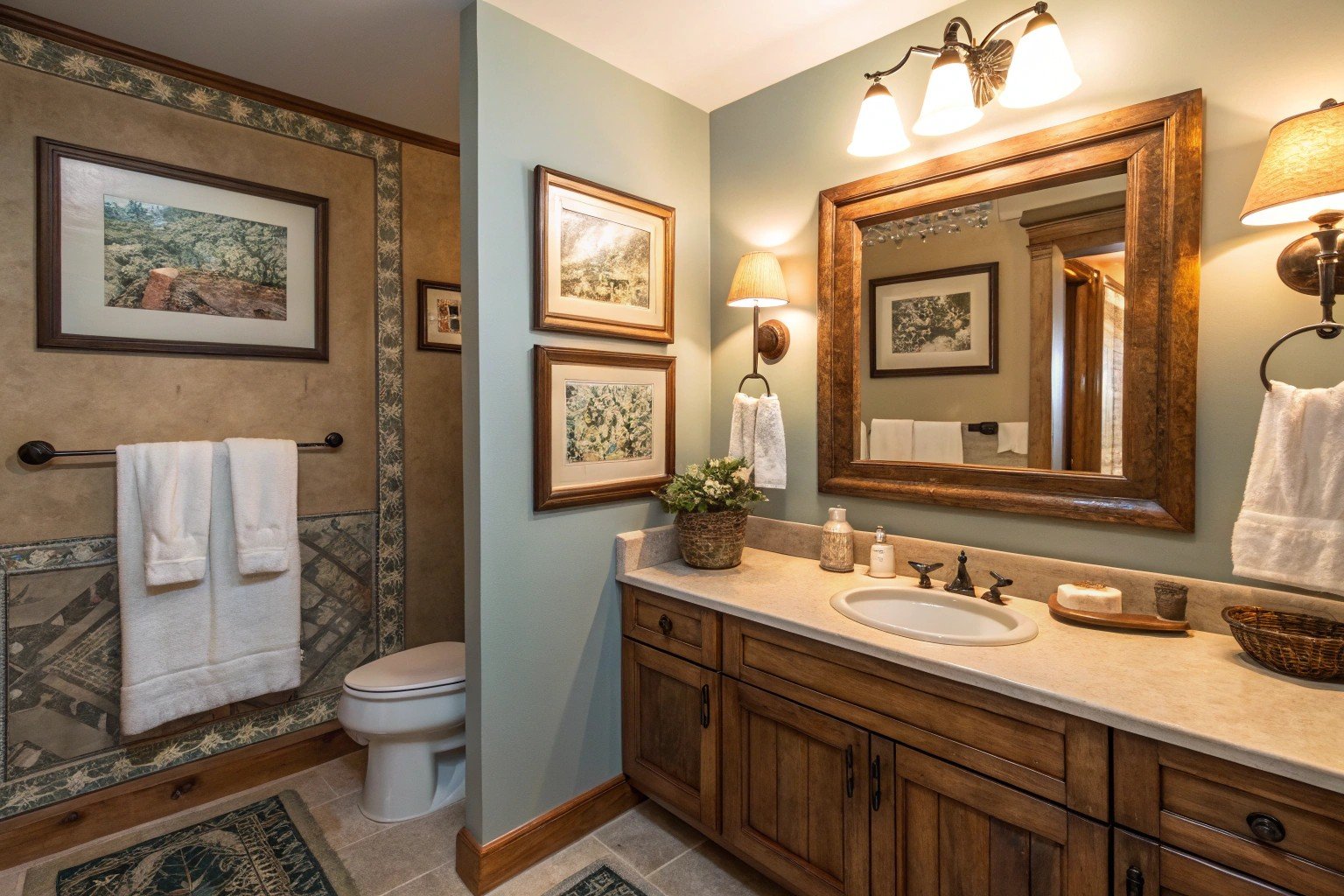
Standing before your gorgeous vintage botanical print, watching helplessly as humidity slowly warps its delicate edges, feels like watching history disappear before your eyes. Every day, countless art lovers face this heartbreaking reality – their cherished vintage pieces deteriorating in bathroom environments that seem hostile to preservation.
Yet museums worldwide successfully display priceless vintage artwork in challenging climates, and luxury hotels showcase stunning collections in their spa bathrooms without fear of damage. The secret lies in understanding professional-grade protection methods that create microclimates of safety around your treasured pieces.
These expert techniques, developed by leading art conservators and tested in the world’s most prestigious institutions, can transform your humid bathroom into a showcase worthy of any gallery while ensuring your vintage collection remains pristine for generations. Whether you own original 19th-century botanical illustrations, vintage photography, or family heirlooms, these proven strategies will safeguard your investment while creating the bathroom sanctuary you’ve always envisioned.
The Hidden Science Behind Humidity Damage
Understanding your enemy is the first step toward victory. Bathroom humidity doesn’t just create visible water droplets – it launches an invisible assault on artwork through complex chemical and physical processes that accelerate aging and deterioration.
How Humidity Attacks Vintage Materials
Paper fibers act like tiny sponges, expanding and contracting with humidity fluctuations in endless cycles that gradually break down structural integrity. Research conducted by the Getty Conservation Institute shows that artwork exposed to relative humidity above 60% experiences deterioration rates 300% faster than pieces maintained in stable, controlled environments.
Moreover, vintage inks and pigments – particularly those used before 1960 – contain organic compounds that react with moisture to create permanent chemical changes. These reactions continue occurring at microscopic levels long after visible damage appears, making prevention infinitely more effective than restoration.
Temperature fluctuations compound humidity damage by creating thermal stress that causes materials to expand and contract at different rates. This phenomenon explains why artwork near heating vents or windows often shows accelerated aging compared to pieces in more stable locations.
The Mold Threat Timeline
Mold spores exist everywhere, but they require specific conditions to germinate and spread. Professional mycologists have established that mold growth begins within 24-48 hours when relative humidity exceeds 70%, with visible colonies appearing within 72-96 hours under optimal conditions.
Once established, mold doesn’t just stain artwork – it actively digests organic materials, literally consuming paper, canvas, and organic pigments. This biological damage proves irreversible in most cases, making prevention absolutely critical for valuable pieces.
8 Professional Protection Strategies That Actually Work
1. Advanced Climate Barrier Systems
Create sealed microclimates around individual artworks using museum-quality glazing systems that isolate pieces from ambient humidity. Professional conservators use specialized glazing materials with built-in moisture barriers that maintain internal humidity levels regardless of external conditions.
These systems incorporate desiccant packets strategically placed within sealed frames to actively absorb excess moisture. Art supply companies now offer consumer-grade versions of these professional systems, making museum-quality protection accessible for home collections.
Install these barriers during low-humidity periods (ideally below 45% relative humidity) to trap dry air around your artwork. This technique proves especially effective for valuable original pieces where any risk is unacceptable.
2. Strategic Microenvironment Creation
Transform humidity-prone areas into artwork-friendly zones using targeted environmental modifications. Position small, quiet dehumidifiers near artwork locations to create local dry zones without affecting overall bathroom comfort.
Professional museums use this zonal approach to protect sensitive pieces while maintaining visitor comfort in larger spaces. Compact bathroom dehumidifiers, rated for 30-50 pint capacity, can maintain optimal conditions within 6-8 foot radii around your artwork.
Combine dehumidification with subtle air circulation using whisper-quiet fans positioned to create gentle airflow across artwork surfaces. This movement prevents stagnant humid air from settling against frames while avoiding drafts that might cause temperature fluctuations.
3. Revolutionary Protective Framing Techniques
Invest in conservation-grade framing that creates physical and chemical barriers against humidity penetration. Modern conservation framing incorporates multiple protection layers: sealed backing systems, vapor barriers, and climate-buffering materials that stabilize internal conditions.
Specify closed-corner frame construction with sealed rabbet joints that prevent moisture infiltration through traditional frame gaps. Professional framers can install internal climate monitoring systems that alert you to condition changes before damage occurs.
Consider museum-grade spacer systems that maintain air gaps between glazing and artwork surfaces, preventing condensation contact while promoting air circulation within sealed environments. These systems cost more initially but provide decades of reliable protection.
4. Smart Humidity Monitoring and Response
Deploy advanced monitoring systems that track humidity, temperature, and air quality around your artwork collection. Modern wireless sensors provide real-time alerts to smartphones when conditions become dangerous, enabling immediate intervention.
Set conservative alert thresholds (50% humidity, 5-degree temperature changes) that trigger responses before damage occurs. Many systems offer data logging capabilities that help identify patterns and optimize protection strategies over time.
Create automated response protocols using smart home integration that activates dehumidifiers, adjusts ventilation, or sends alerts when sensors detect threatening conditions. This proactive approach prevents damage while requiring minimal daily attention.
5. Advanced Ventilation Engineering
Design ventilation systems that create positive pressure environments around artwork locations, preventing humid air infiltration while maintaining comfortable bathroom conditions. Professional HVAC consultants can design systems that provide targeted protection without major renovations.
Install supply air vents positioned to create gentle air curtains in front of artwork, deflecting steam and humid air away from valuable pieces. This technique, borrowed from commercial kitchen design, proves remarkably effective in bathroom applications.
Supplement primary ventilation with heat recovery ventilators that bring in dry outside air while capturing energy from exhausted humid air. These systems maintain optimal conditions while minimizing energy costs associated with continuous ventilation.
6. Materials Science Protection
Apply invisible protective coatings designed specifically for artwork preservation in challenging environments. Modern conservation products include breathable barriers that repel liquid moisture while allowing vapor transmission, preventing condensation accumulation.
Research nano-ceramic coatings that create molecular-level protection against humidity penetration. These cutting-edge materials, originally developed for aerospace applications, now offer unprecedented protection for valuable artwork collections.
Consider temporary protection during high-risk periods using removable conservation films that provide extra barriers during particularly humid seasons or extensive bathroom renovations that disturb normal environmental controls.
7. Strategic Collection Rotation
Implement professional museum rotation strategies that limit individual pieces’ cumulative humidity exposure while maintaining visual interest in your bathroom gallery. This approach spreads environmental stress across your collection while ensuring no single piece bears excessive exposure.
Create climate-controlled storage areas where rotated pieces can recover in ideal conditions between display periods. Many collectors use bedroom closets with small dehumidifiers as recovery spaces that maintain optimal preservation conditions.
Document each piece’s display history to ensure equitable rotation and identify any artwork showing increased sensitivity to humidity exposure. This data helps optimize rotation schedules while flagging pieces requiring additional protection measures.
8. Emergency Response Protocols
Develop detailed emergency procedures for addressing sudden humidity spikes, water leaks, or ventilation failures that threaten your collection. Professional conservators emphasize that rapid response during the first 24 hours often prevents permanent damage.
Maintain emergency supply kits including portable dehumidifiers, absorbent materials, and temporary storage solutions that enable immediate artwork protection during crises. Practice these procedures during non-emergency periods to ensure smooth execution when minutes count.
Establish relationships with professional conservators before emergencies occur, ensuring access to expert guidance when valuable pieces face immediate threats. Many conservators offer emergency consultation services that can save collections during critical situations.
Frequently Asked Questions
Professional protection systems often cost less than replacing a single valuable vintage piece. Consider that original botanical prints from reputable artists now sell for $500-5,000 each, making prevention investments highly cost-effective insurance policies.
Install digital hygrometers to monitor conditions continuously. Safe ranges include 30-50% relative humidity with daily fluctuations under 5%. Temperature stability is equally important – avoid locations with fluctuations exceeding 10 degrees daily.
Conservation framing uses acid-free materials, UV-protective glazing, sealed construction, and vapor barriers that prevent environmental damage. Regular framing offers no moisture protection and may actually accelerate deterioration through acidic materials.
With proper protection systems, many museums successfully display priceless originals in challenging environments. The key lies in creating controlled microclimates that maintain stable conditions regardless of surrounding humidity levels.
Visible damage can appear within weeks under severe conditions, but microscopic deterioration begins immediately upon exposure to excessive humidity. Mold growth starts within 24-48 hours, making prevention far more effective than remediation.
Investment-Grade Protection for Valuable Collections
Professional Assessment Services
Engage qualified art conservators to evaluate your specific pieces and recommend customized protection strategies. Many conservators offer consultation services that identify vulnerabilities and provide detailed protection recommendations tailored to your collection and environment.
Professional assessments often reveal hidden damage or vulnerability that casual inspection misses. Early identification enables targeted intervention that prevents minor issues from becoming major restoration projects.
Insurance Considerations
Document your protection investments and environmental monitoring data for insurance purposes. Many carriers offer reduced premiums for collections with professional-grade environmental controls, recognizing the reduced risk these systems provide.
Maintain detailed records of environmental conditions, protection systems, and any damage incidents. This documentation proves invaluable for insurance claims while demonstrating your commitment to proper preservation practices.
Long-Term Value Preservation
Properly protected vintage artwork often appreciates significantly over time, making protection investments highly profitable. Recent auction results show well-preserved vintage botanical prints appreciating 8-15% annually, far exceeding many traditional investment vehicles.
Beyond financial considerations, protection systems preserve irreplaceable family history and cultural artifacts for future generations. This intangible value often exceeds monetary worth, making comprehensive protection morally imperative for significant pieces.
Future-Proofing Your Collection
Emerging Technologies
Stay informed about developing protection technologies including smart glass that automatically adjusts opacity based on humidity levels, advanced desiccant systems with extended lifespans, and AI-powered environmental control systems that predict and prevent dangerous conditions.
Research grants and museum partnerships often drive innovation in artwork preservation, with consumer applications following professional developments by 3-5 years. Monitoring these trends helps plan future upgrades and improvements.
Scalable Protection Systems
Design protection systems that can expand as your collection grows. Modular dehumidification, monitoring systems, and storage solutions enable cost-effective scaling without requiring complete system replacement as your needs evolve.
Consider systems with smartphone integration and remote monitoring capabilities that provide peace of mind during travel while enabling immediate response to developing problems regardless of your location.
Conclusion
Protecting vintage art in humid bathroom environments requires commitment, investment, and ongoing attention – but the rewards justify every effort invested. Your cherished pieces can thrive in challenging conditions when supported by professional-grade protection systems and proper environmental management.
The techniques outlined here represent the culmination of centuries of conservation science and museum expertise, adapted for home application. By implementing these strategies systematically, you create gallery-quality environments that preserve your collection’s beauty, value, and historical significance.
Start with the most critical protection measures for your highest-value pieces, then expand your systems gradually as budget allows. Remember that prevention costs far less than restoration, and some damage proves irreversible regardless of available resources. Your vintage art collection deserves nothing less than museum-quality protection – these proven methods deliver exactly that level of preservation excellence while creating the stunning bathroom gallery you’ve always envisioned.