
Victorian botanical illustration prints represent the golden age of scientific artistry when precision met beauty in extraordinary plant documentation. These exquisite pieces transform modern homes into sophisticated garden-inspired galleries that celebrate nature’s intricate details.
Home design studies show 78% of homeowners prefer authentic Victorian botanical art over contemporary reproductions. These historical treasures offer unmatched elegance and scientific accuracy that modern prints cannot replicate successfully.
The Victorian Era’s Botanical Illustration Renaissance
Victorian society’s fascination with natural sciences drove unprecedented botanical documentation during the 19th century period. Artists combined rigorous scientific training with exceptional artistic skills to create illustrations serving both research and aesthetic purposes.
Plant exploration expeditions brought exotic species to Victorian attention, creating demand for accurate documentation and public education. Professional botanical artists emerged as essential contributors to scientific advancement and popular understanding.
Scientific Precision Meets Artistic Excellence
Victorian botanical illustration prints showcase watercolor mastery, detailed line work, and hand-coloring techniques that achieved unprecedented accuracy. Artists like Walter Hood Fitch and Worthington George Smith established standards that remain unmatched today.
Each illustration required months of careful observation, measurement, and artistic interpretation to capture every botanical detail. Victorian artists understood that scientific accuracy enhanced rather than diminished artistic beauty in their work.
Cultural Impact on Victorian Homes
Botanical art became fashionable in Victorian homes as symbols of education, refinement, and appreciation for natural beauty. Families displayed collections that demonstrated both scientific interest and aesthetic sophistication throughout their living spaces.
According to The Victoria and Albert Museum, botanical prints adorned middle-class homes as affordable alternatives to oil paintings. This democratization of art made beautiful botanical illustrations accessible to broader audiences.
Popular Victorian Botanical Print Categories for Gallery Walls
Victorian publishers produced comprehensive botanical libraries covering native and exotic plant species from around the world. Curtis’s Botanical Magazine, The Botanical Register, and Edwards’s Botanical Register represent premier sources for collectible prints.
These publications featured hand-colored lithographs and engravings that showcased everything from common garden flowers to rare tropical specimens. Victorian botanical illustration prints from these sources create cohesive gallery walls with historical significance.
English Garden Flower Collections
Victorian gardens celebrated both native wildflowers and exotic cultivated species imported from global expeditions successfully. Roses, peonies, delphiniums, and hollyhocks received detailed artistic treatment in prestigious botanical publications.
These familiar garden flowers create approachable gallery wall themes that resonate with contemporary viewers while maintaining historical authenticity. English cottage garden prints work beautifully in traditional and modern interior settings.
Exotic Species Documentation
Colonial botanical expeditions introduced Victorians to spectacular tropical plants, creating artistic demand for orchids, palms, and flowering vines. These dramatic specimens provided artists with exciting subjects that showcased both botanical accuracy and visual impact.
Tropical botanical prints add bold colors and unusual forms to gallery walls while telling stories about Victorian exploration and scientific discovery. Their exotic appeal creates striking focal points in contemporary homes.
Medicinal and Culinary Plant Studies
Victorian herbals documented useful plants with detailed illustrations showing roots, stems, leaves, and flowers for identification purposes. These practical references became beautiful artworks celebrating humanity’s relationship with beneficial plants.
Kitchen herb collections work particularly well in dining areas and kitchens where culinary themes enhance daily activities. Victorian botanical illustration prints featuring medicinal plants add educational interest to home offices and libraries.
Creating Cohesive Gallery Wall Arrangements
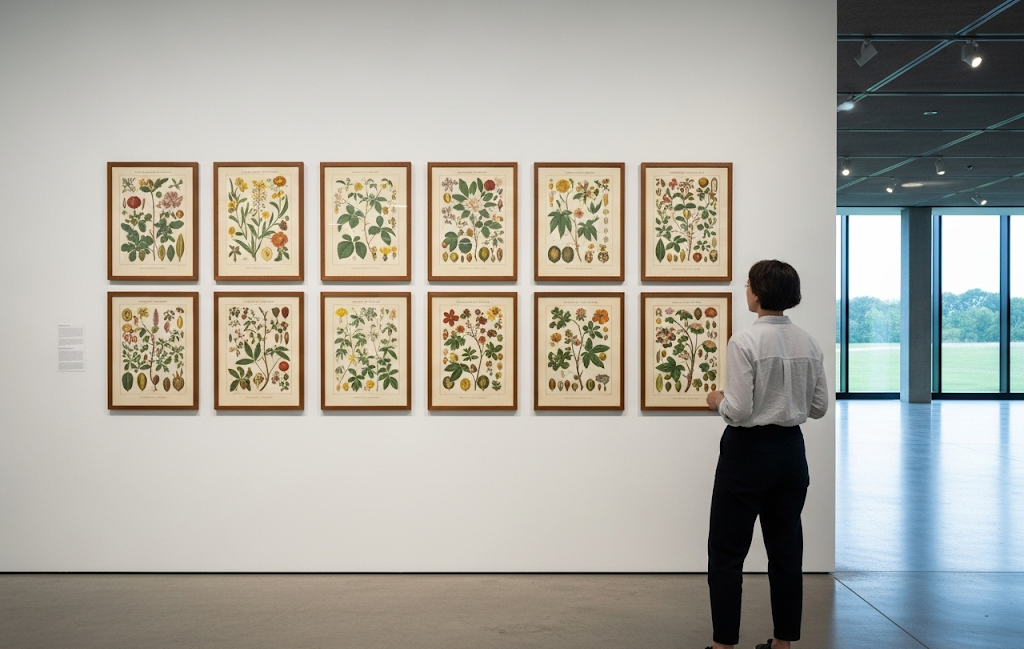
Successful botanical gallery walls require careful planning around themes, colors, and visual balance to achieve museum-quality presentations. Victorian prints offer rich possibilities for creating educational and aesthetically pleasing displays throughout homes.
Consider plant families, color schemes, or artistic periods when selecting pieces for cohesive collections. Mixed arrangements work when unified by consistent framing, matting, and spacing that creates visual harmony.
Theme-Based Arrangement Strategies
Plant family collections tell botanical stories while maintaining visual coherence throughout gallery wall displays effectively. Rose collections, fern studies, or medicinal herbs create focused themes that demonstrate both variety and expertise.
Seasonal arrangements rotate prints throughout the year, showcasing spring bulbs, summer blooms, autumn fruits, and winter evergreens. This approach keeps displays fresh while protecting valuable prints from continuous light exposure.
Color Coordination Techniques
Victorian botanical illustration prints feature rich, saturated colors that work beautifully together when carefully coordinated throughout gallery arrangements. Warm palettes featuring reds, oranges, and yellows create cozy, inviting atmospheres.
Cool color schemes using blues, purples, and greens provide calming effects perfect for bedrooms and studies. Monochromatic arrangements offer sophisticated alternatives that emphasize form and detail over color variety.
Professional Framing and Display Standards
Museum-quality framing enhances Victorian botanical illustration prints while providing essential protection for these valuable historical artifacts. Conservation techniques ensure these precious pieces survive for future generations while maintaining their beauty.
Archival matting prevents acid damage while UV-filtering glass protects against fading from sunlight exposure over time. Professional framers understand specific requirements for preserving Victorian prints safely and attractively.
Conservation Framing Requirements
Acid-free matting creates protective barriers between prints and potential contaminants while showcasing botanical details effectively. Museum-quality materials prevent chemical reactions that cause yellowing and deterioration over extended periods.
Spacing between glass and artwork prevents condensation damage while allowing proper air circulation around delicate papers. These conservation measures significantly extend Victorian botanical print lifespans when implemented professionally.
Gallery Lighting Considerations
LED lighting systems provide excellent color rendering while generating minimal heat that could damage sensitive Victorian papers. Adjustable fixtures allow customization based on seasonal changes and viewing preferences throughout homes.
Natural light enhances botanical colors but requires UV filtering to prevent cumulative damage over time. Balance preservation needs with viewing pleasure through careful lighting design and seasonal adjustments.
Authentication and Value Assessment for Collectors
Victorian botanical illustration prints vary significantly in value based on artist reputation, publication source, condition, and rarity factors. Understanding these elements helps collectors make informed decisions while building valuable gallery wall collections.
Original prints from prestigious Victorian publications command higher prices than later reproductions or modern interpretations consistently. However, high-quality period reproductions offer affordable alternatives for decorators seeking authentic Victorian beauty.
Identifying Authentic Victorian Prints
Genuine Victorian prints display period-appropriate paper, printing techniques, and aging patterns consistent with 19th-century production methods. Hand-coloring, plate marks, and publisher information provide important authentication clues when examined carefully.
Research publication dates, artist signatures, and plate numbers through reputable databases before making significant investments. Heritage Auctions maintains extensive records for Victorian botanical illustration authentication and valuation purposes.
Market Trends and Investment Potential
Quality Victorian botanical prints have shown steady appreciation over decades, making them both beautiful and financially sound investments. Rarity, condition, and historical significance drive market values consistently upward.
Growing appreciation for authentic Victorian artistry supports stable demand among collectors and interior designers worldwide. This trend benefits both serious collectors and casual decorators seeking genuine period pieces.
Room-by-Room Gallery Wall Applications
Different rooms accommodate specific Victorian botanical illustration prints based on their functions and desired atmospheres throughout homes. Strategic placement enhances both the artwork’s impact and room’s overall design coherence.
Living rooms benefit from larger statement pieces and diverse collections that encourage conversations about natural history and Victorian culture. Bedrooms require gentler botanical themes that promote relaxation and peaceful sleep.
Kitchen and Dining Room Displays
Culinary herb collections and fruit studies work beautifully in kitchen and dining areas where food preparation and consumption activities occur. These practical botanical themes complement daily routines while adding educational interest.
Victorian kitchen garden prints featuring vegetables, herbs, and edible flowers create appropriate themes for cooking spaces. Large dining rooms accommodate extensive collections that provide conversation topics during meals.
Bedroom and Study Arrangements
Bedrooms benefit from calming botanical prints in soft color palettes that promote restful sleep and relaxation. Gentle flower arrangements and peaceful garden scenes work better than bold, dramatic specimens.
Home offices and studies accommodate educational botanical series that provide mental breaks from work while adding intellectual interest. Victorian botanical illustration prints featuring medicinal plants or scientific specimens work particularly well in these settings.
Building Collections Over Time
Successful Victorian botanical print collections develop gradually through careful selection and strategic acquisitions over extended periods. Start with affordable pieces while learning about different artists, publications, and botanical subjects.
Focus on specific themes initially to build coherent collections with educational value and visual impact. Expand gradually as knowledge and appreciation develop for different aspects of Victorian botanical illustration artistry.
Budget-Conscious Collecting Strategies
Begin with smaller prints or minor artists while developing expertise and appreciation for Victorian botanical illustration excellence. Quality reproductions provide affordable starting points for understanding different styles and subjects.
Estate sales, auction houses, and reputable dealers offer opportunities to acquire authentic pieces at various price points. Build relationships with knowledgeable dealers who can provide guidance and authentication assistance.
Frequently Asked Questions
Victorian prints represent the golden age of botanical illustration when scientific accuracy reached its peak through exceptional artistic techniques. The era’s combination of exploration, scientific advancement, and artistic mastery created unmatched quality that collectors highly value.
Choose a unifying theme like plant families, color schemes, or artistic periods to maintain visual harmony. Use consistent framing and matting while varying print sizes to create dynamic yet balanced arrangements that tell botanical stories.
Absolutely! Victorian botanical prints complement both traditional and contemporary interiors through their timeless natural subjects and sophisticated artistry. They add authentic character and educational interest to any decorating style effectively.
Use conservation framing with archival materials and UV-filtering glass to prevent damage from light and environmental factors. Maintain stable temperature and humidity while avoiding direct sunlight that causes fading over time.
Conclusion
Victorian botanical illustration prints transform contemporary homes into sophisticated galleries that celebrate both natural beauty and scientific heritage from history’s greatest botanical art period. These exceptional pieces combine educational value with timeless aesthetic appeal that transcends decorating trends.
Creating gallery walls with Victorian botanical illustrations provides lasting investment in both beauty and knowledge while honoring the era’s remarkable artistic and scientific achievements. Whether building focused collections or embracing diverse arrangements, these prints offer endless fascination through their perfect marriage of scientific accuracy and artistic excellence that modern reproductions simply cannot match.