

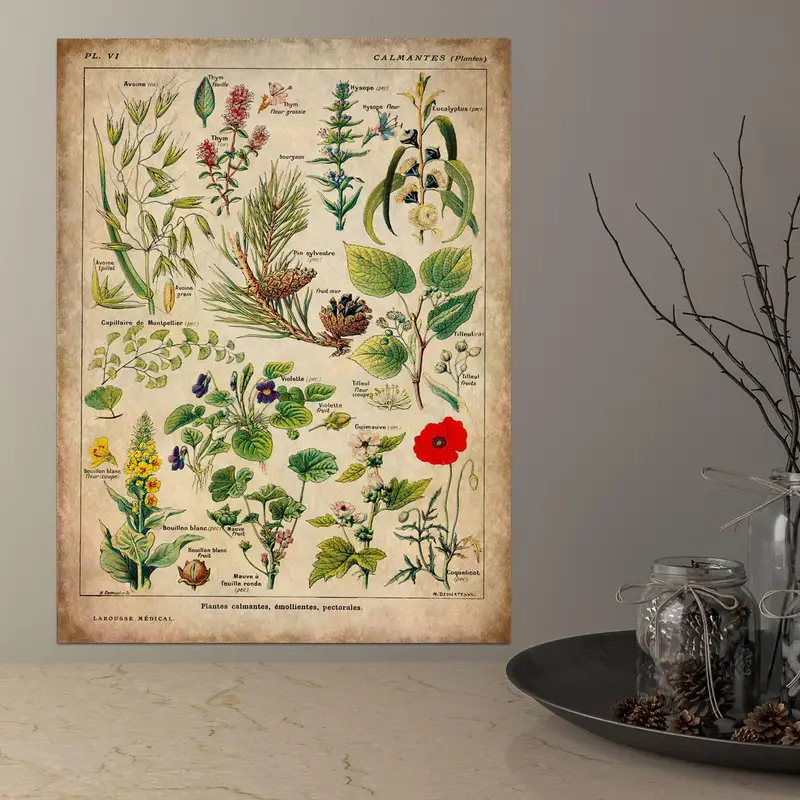
Imagine walking into your living room and feeling like you’ve stepped into the hallowed halls of the Royal Botanic Gardens’ archives. That’s exactly what happens when you strategically incorporate vintage scientific botanical drawings into your home décor. These timeless masterpieces don’t just beautify your walls—they create an atmosphere of intellectual curiosity and scholarly elegance that transforms any space into a personal research sanctuary.
The Irresistible Charm of Scientific Botanical Art
Vintage botanical drawings represent more than mere decoration. Originally created between the 16th and 19th centuries, these intricate illustrations served as essential scientific documentation when photography wasn’t available. Artists like Pierre-Joseph Redouté, Georg Dionysius Ehret, and Maria Sibylla Merian spent countless hours capturing every petal, leaf, and stem with mathematical precision.
Today, these historical treasures offer homeowners a unique opportunity to blend scientific heritage with sophisticated interior design. The meticulous attention to detail, combined with their educational value, makes them perfect conversation starters that reflect both your aesthetic sensibilities and intellectual pursuits.
Why Botanical Drawings Create the Perfect Research Library Atmosphere
1. Instant Intellectual Credibility
Nothing says “serious scholar” quite like walls adorned with scientific illustrations. These drawings immediately communicate that you appreciate knowledge, history, and the intersection of art and science. Guests will naturally assume you’re well-read and cultured—and they’ll be right to think so.
2. Timeless Educational Value
Unlike trendy art that becomes dated, botanical drawings remain perpetually relevant. They serve as constant learning tools, allowing you and your family to identify plant species, understand botanical structures, and appreciate the evolution of scientific illustration techniques.
3. Versatile Design Elements
Scientific botanical drawings seamlessly complement various interior design styles. Whether your home features traditional, modern, farmhouse, or eclectic décor, these illustrations adapt beautifully. Their neutral color palettes and clean lines make them incredibly versatile design elements.
Frequently Asked Questions
Scientific botanical drawings differ from decorative floral art because they prioritize accuracy over aesthetics. These illustrations include detailed cross-sections, root systems, seed pods, and growth stages. They often feature Latin nomenclature and precise measurements, serving as legitimate scientific documentation.
Authentic vintage prints are available through antique dealers, estate sales, specialized art galleries, and reputable online marketplaces. However, high-quality reproductions offer an affordable alternative that delivers the same visual impact without the hefty price tag of originals.
Create gallery walls using matching frames in gold, black, or natural wood finishes. Group drawings by plant families, color schemes, or sizes for cohesive visual appeal. Consider mixing different sizes—large statement pieces anchored by smaller supporting illustrations work particularly well.
While botanical drawings enhance any space, they’re particularly effective in home offices, libraries, dining rooms, and bedrooms. These rooms benefit from the calming, intellectual atmosphere that scientific illustrations naturally create.
7 Proven Strategies for Creating Your Botanical Research Library
Strategy 1: Focus on Native Species
Choose botanical drawings featuring plants native to your region. This approach creates a personal connection to your local ecosystem while providing practical educational value for identifying plants during nature walks.
Strategy 2: Mix Original Periods and Artists
Combine works from different centuries and botanical illustrators to create visual diversity. Pair 18th-century English illustrations with 19th-century German scientific drawings for rich historical depth.
Strategy 3: Include Functional Elements
Integrate actual books on botany, pressed flower collections, or vintage magnifying glasses to reinforce the research library aesthetic. These elements make your space genuinely functional for botanical study.
Strategy 4: Create Themed Collections
Organize your botanical art around specific themes—medicinal plants, tropical species, or poisonous flora. Themed collections demonstrate specialized knowledge and create focused discussion points.
Strategy 5: Incorporate Modern Scientific Tools
Balance historical illustrations with contemporary botanical resources. Include field guides, botanical journals, and modern identification apps to bridge the gap between vintage charm and current scientific knowledge.
Strategy 6: Use Strategic Lighting
Install picture lights or track lighting to highlight your botanical drawings. Proper illumination not only protects the artwork but also creates the scholarly atmosphere essential for a research library feel.
Strategy 7: Add Personal Documentation
Create your own botanical sketches or pressed flower collections alongside vintage prints. This personal touch demonstrates active engagement with botanical science and makes your collection uniquely meaningful.
The Investment Value of Vintage Botanical Art
Beyond their decorative appeal, authentic vintage botanical prints often appreciate in value. Original works by renowned illustrators like Redouté can cost thousands of dollars and continue increasing in worth. Even high-quality reproductions maintain their value better than mass-produced contemporary art.
Market research indicates that botanical and natural history prints have shown consistent demand over the past decade, making them both beautiful and financially sound investments for art collectors.
Creating Conversation and Connection
Botanical drawings naturally spark conversations about nature, science, and history. They provide endless opportunities for learning and discussion, making your home a gathering place for intellectually curious friends and family members.
Children particularly benefit from growing up surrounded by scientific illustrations. These images subtly encourage observation skills, scientific thinking, and appreciation for the natural world—qualities that serve them throughout their educational journey.
Conclusion: Your Home, Your Personal Research Haven
Transforming your home into a sophisticated research library doesn’t require extensive renovations or massive investments. Strategic placement of vintage scientific botanical drawings creates an atmosphere of scholarly elegance that reflects your intellectual curiosity and refined taste.
These timeless illustrations offer the perfect blend of beauty, education, and sophistication. They transform ordinary rooms into extraordinary spaces that inspire learning, spark conversations, and provide endless visual interest.
Start small with a few carefully chosen pieces, then gradually build your collection as you discover which plant families and artistic styles resonate most strongly with your personal aesthetic. Before long, you’ll have created a home environment that rivals the most prestigious research libraries—and one that’s uniquely, authentically yours.
Your walls will tell the story of scientific discovery, artistic achievement, and your own commitment to lifelong learning. That’s the true magic of vintage botanical drawings: they don’t just decorate your space—they elevate it.