
Romance and science unite beautifully in the world of botanical art, where meticulous documentation meets artistic excellence. Today’s homeowners increasingly appreciate authentic historical pieces that combine educational value with stunning visual appeal. Antique rose botanical illustrations represent the pinnacle of this artistic tradition, offering both scientific accuracy and romantic beauty that transforms any wall into an elegant gallery.
These masterful works emerged from centuries of botanical exploration and scientific discovery. Renowned artists collaborated with botanists to create detailed studies that served both educational and decorative purposes in refined households across Europe and America.
Antique rose botanical illustrations offer unique advantages over modern reproductions or contemporary floral art. Their historical authenticity, scientific precision, and artistic mastery create compelling focal points that educate while they enchant, making them perfect investments for sophisticated home décor.
Historical Significance of Rose Botanical Art
Scientific Revolution and Artistic Excellence
Antique rose botanical illustrations emerged during the 18th and 19th centuries when botanical science experienced unprecedented growth and refinement. Artists like Pierre-Joseph Redouté revolutionized botanical art by combining scientific accuracy with exceptional artistic skill, creating masterpieces that remain unsurpassed today.
The collaboration between scientists and artists produced illustrations that served multiple purposes. These works documented new species discoveries, educated gardeners and botanists, and decorated the homes of wealthy collectors who appreciated both beauty and knowledge.
Major botanical expeditions funded detailed illustrations of newly discovered rose varieties. These expedition records, housed in institutions like The Royal Botanic Gardens, Kew, provide invaluable historical documentation while inspiring contemporary collectors with their artistic excellence.
Cultural Impact and Social Status
Antique rose botanical illustrations represented refined taste and intellectual curiosity in 19th-century society. Wealthy families displayed these scientific artworks to demonstrate their appreciation for both natural beauty and scholarly pursuits, establishing traditions that continue influencing modern collecting.
The rose’s symbolic significance as the ultimate flower of love and beauty made botanical illustrations particularly desirable for domestic display. These pieces combined romantic associations with scientific credibility, appealing to both emotional and intellectual sensibilities.
Educational institutions, libraries, and private collectors competed for the finest examples. This demand drove artistic innovation while establishing market values that persist today, making authentic pieces valuable investments for serious collectors.
Understanding Artistic Techniques and Styles
Traditional Media and Methods
Antique rose botanical illustrations employed sophisticated artistic techniques that modern printing cannot fully replicate. Hand-coloring with watercolors over precise engravings created subtle color variations and textures that give authentic pieces their distinctive character and lasting appeal.
Copper plate engraving provided the foundation for most high-quality botanical illustrations. This labor-intensive process produced incredibly fine details that captured every petal, thorn, and leaf structure with scientific precision while maintaining artistic beauty.
Stipple engraving techniques created soft, romantic effects particularly suited to rose subjects. These methods produced gentle transitions and delicate shading that enhanced the romantic qualities while preserving botanical accuracy essential for scientific documentation.
Master Artists and Their Contributions
Pierre-Joseph Redouté stands as the undisputed master of rose botanical illustration. His “Les Roses” series, published between 1817-1824, established standards for botanical art that remain unmatched. Original Redouté prints command premium prices while inspiring countless reproductions.
Georg Dionysius Ehret pioneered many techniques that influenced subsequent botanical artists. His innovative approaches to color application and compositional arrangement created template formats that other artists adopted and refined throughout the golden age of botanical illustration.
English artists like James Sowerby and Walter Hood Fitch contributed significantly to botanical illustration traditions. Their works, often featured in prestigious publications, demonstrate the international scope of botanical art excellence during this remarkable period.
Evaluating Authenticity and Quality
Identifying Genuine Antique Pieces
Antique rose botanical illustrations display specific characteristics that distinguish them from modern reproductions. Paper quality, printing methods, and aging patterns provide crucial authentication clues that knowledgeable collectors learn to recognize and appreciate.
Original hand-coloring shows brush stroke variations and color irregularities that mechanical printing cannot replicate. These subtle imperfections actually enhance authenticity and value, demonstrating the human artistry behind each piece’s creation.
Watermarks, publisher’s marks, and plate numbers offer additional verification methods. Research these identifying features through auction records and museum databases to confirm attribution and publication details essential for accurate valuation.
Condition Assessment and Value Factors
Condition significantly affects both visual appeal and investment value of antique rose botanical illustrations. Foxing, fading, and paper deterioration impact pricing while professional conservation can restore pieces to display-worthy condition.
Rarity influences value more than condition in many cases. Uncommon species, limited print runs, or prestigious publications command premium prices even when showing age-related wear that might diminish less significant pieces.
Provenance documentation enhances both authenticity verification and market value. Maintain detailed purchase records, exhibition history, and any professional appraisal documentation to support future resale or insurance valuations.
Creating Romantic Wall Displays
Strategic Arrangement and Composition
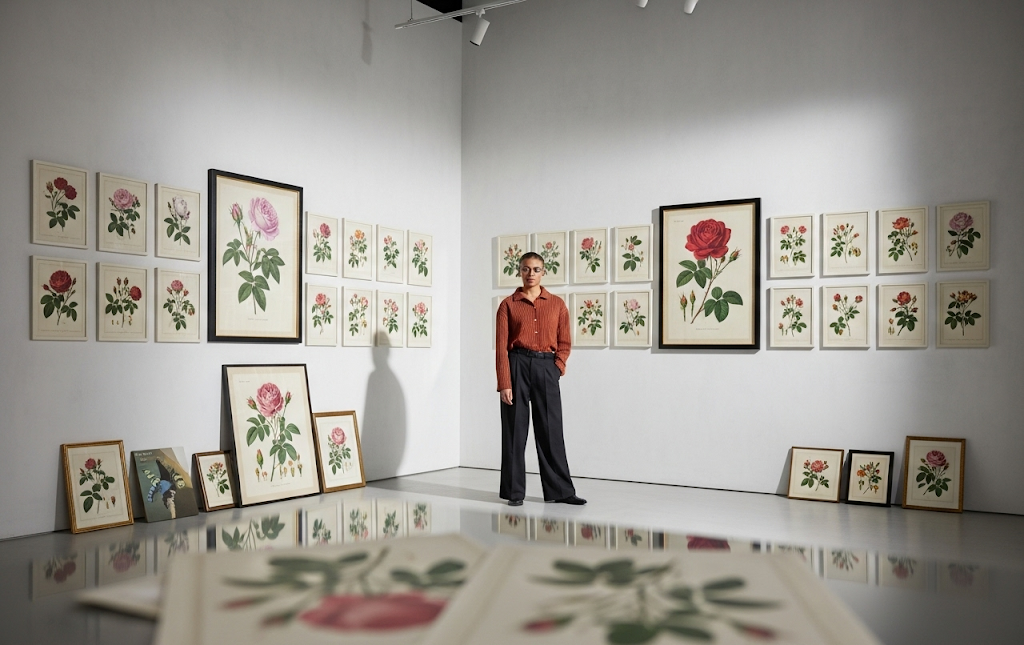
Antique rose botanical illustrations achieve maximum romantic impact through thoughtful arrangement that highlights both individual pieces and collective beauty. Gallery wall compositions allow multiple specimens to create comprehensive rose variety displays that educate while they enchant.
Symmetrical arrangements work particularly well with botanical subjects that naturally suggest order and scientific classification. Balance different rose species, colors, and growth habits to create visually pleasing compositions that demonstrate botanical diversity.
Consider sight lines and viewing distances when planning arrangements. Antique rose botanical illustrations reward close examination of details, so position pieces where viewers can appreciate artistic techniques and scientific accuracy from comfortable distances.
Complementary Design Elements
Frame selection dramatically impacts the presentation of antique rose botanical illustrations. Period-appropriate frames enhance authenticity while modern options can create interesting contrasts that highlight the artwork’s historical significance within contemporary settings.
Lighting becomes crucial for properly displaying these detailed works. UV-filtering picture lights protect delicate colors while providing illumination that highlights intricate details and subtle color variations essential to full appreciation.
Supporting décor should enhance rather than compete with botanical illustrations. Choose complementary colors, natural materials, and refined accessories that reinforce the romantic, scholarly atmosphere these pieces naturally create.
Investment Potential and Market Trends
Current Market Analysis
Antique rose botanical illustrations represent stable investment opportunities within the broader botanical art market. Demand remains consistently strong among collectors who appreciate both aesthetic beauty and historical significance, supporting steady price appreciation over time.
Rarity and artist attribution significantly influence market values. Redouté prints command top prices, while works by lesser-known but skilled artists offer entry points for beginning collectors seeking quality pieces at accessible price points.
Market trends favor original hand-colored pieces over later reproductions or mechanically printed versions. Collectors increasingly recognize the superior artistic quality and investment potential of authentic historical pieces compared to modern alternatives.
Long-term Appreciation Factors
Antique rose botanical illustrations benefit from multiple appreciation factors that support long-term value growth. Their dual appeal as both art and scientific documentation creates diverse collector bases that maintain steady demand across market cycles.
Cultural trends toward authenticity and historical appreciation favor genuine antique pieces over contemporary reproductions. This preference supports premium pricing for original works while limiting competition from modern alternatives.
Limited supply ensures scarcity that supports value appreciation. Unlike contemporary art where new pieces continuously enter the market, antique rose botanical illustrations represent finite resources that become increasingly scarce and valuable over time.
Care and Conservation Guidelines
Environmental Protection Strategies
Antique rose botanical illustrations require careful environmental management to preserve their beauty and value. UV protection prevents fading while humidity control prevents paper deterioration that could damage these irreplaceable historical documents.
Temperature stability prevents expansion and contraction cycles that stress aged paper and can cause cracking or warping. Maintain consistent conditions between 65-70°F with relative humidity around 45-55% for optimal preservation.
Air quality affects long-term preservation of antique paper and colors. Avoid areas with high pollution, cooking odors, or chemical exposure that could accelerate deterioration of these valuable historical artworks.
Professional Conservation Services
Valuable antique rose botanical illustrations often benefit from professional conservation assessment and treatment. Conservators can address age-related damage while preserving original artistic integrity and historical authenticity.
Documentation photography before and after conservation provides valuable records for insurance and resale purposes. These records demonstrate proper care while tracking any changes in condition over time.
Regular professional evaluation helps identify potential problems before they become serious threats. Early intervention prevents minor issues from developing into major conservation challenges that could significantly impact both appearance and value.
Modern Display Technology and Traditional Art
Digital Integration Possibilities
Modern display technologies can enhance appreciation of antique rose botanical illustrations without compromising their integrity. High-resolution digital photography allows detailed examination of artistic techniques while preserving originals from handling damage.
Interactive displays can provide educational context about botanical accuracy, artistic techniques, and historical significance. These technologies enhance visitor engagement while demonstrating the scholarly value of these remarkable artistic achievements.
Climate-controlled display cases protect valuable pieces while allowing full visual access. Modern museum technology offers solutions for residential collectors who want to display and protect their investments simultaneously.
Lighting Innovation for Antique Art
LED lighting technology provides excellent illumination for antique rose botanical illustrations while generating minimal heat and UV radiation that could damage delicate colors and aged paper materials.
Adjustable lighting systems allow optimization for different viewing conditions and times of day. This flexibility ensures consistent appreciation while accommodating changing natural light conditions throughout seasons.
Color temperature selection affects how viewers perceive subtle color variations in hand-colored illustrations. Warm LED lights often complement the vintage color palettes while cool lights may reveal details invisible under other lighting conditions.
Frequently Asked Questions
Examine paper quality, printing methods, and hand-coloring techniques for period-appropriate characteristics. Research watermarks, publisher marks, and provenance documentation. Professional appraisal provides definitive authentication for valuable pieces requiring investment-level verification.
Prices vary dramatically based on artist, rarity, condition, and provenance. Redouté originals can range from hundreds to thousands of dollars, while works by lesser-known artists may be more affordable. Quality reproductions offer budget-friendly alternatives for decorative purposes.
Provide UV protection, stable temperature and humidity, and protection from air pollution. Use archival framing materials and avoid direct sunlight. Professional conservation assessment helps identify specific needs for valuable pieces requiring specialized care.
Absolutely! These pieces bridge historical authenticity with timeless beauty that complements various design styles. Their scientific precision and artistic excellence create sophisticated focal points that enhance both traditional and contemporary interiors beautifully.
Conclusion
Antique rose botanical illustrations represent the perfect marriage of scientific precision and romantic artistry, creating wall displays that educate while they enchant. These historical masterpieces offer unique advantages over contemporary alternatives through their authentic aging, hand-crafted details, and documented provenance that modern reproductions cannot match.
Whether collected for investment potential or pure aesthetic pleasure, these remarkable works transform any space into an elegant botanical gallery. Proper selection, care, and display ensure these treasures continue inspiring appreciation for both natural beauty and artistic excellence for generations to come.